- Home
- Departments & Services
- Emergency Services
- Emergency Management
- Local Hazards
- Public Safety Power Shutoff
Public Safety Power Shutoff
A Public Safety Power Shutoff is preventative system that utility companies use when they predict extreme weather conditions that could cause a fire. Among many other weather conditions, wind and trees can interfere with electrical transmission and distribution lines, which can ignite fires. The decision and action to turn off power is made by each individual energy company and is based on a combination of factors. Factors include, but are not limited to:
While an extreme weather condition may not be occurring in your area, you should still be on the alert in case you are impacted by a Public Safety Power Shutoff.
Stay Safe. Take Action. 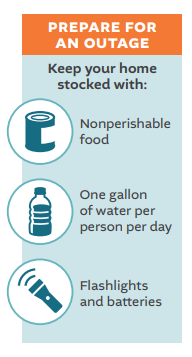
While Public Safety Power Shutoff events are more likely to occur in high fire-risk areas, all Californians could be impacted by emergency events and need to be prepared with a plan. Customers should also update their contact information with their energy company so they can receive notifications. Below are specific steps you and your family can take to be ready, should there be an extended power outage that lasts multiple days.
Go here to learn how our Electric Department is preparing for disasters and what you should do prepare you and your family for public-safety power shutdowns.
For a Statewide PSPS Factsheet, go to Prepare for Power Down.
Healdsburg PSPS Potential Outage Zones
Medical Alert Program
Healdsburg’s Utility Department is committed to providing additional safety measures for customers who need energy for certain medical needs to include sending extra notifications for Public Safety Power Shutoffs (PSPS) and other related events. If you or someone you know has a qualifying medical condition or device, go here to sign up for our Medical Alert Program. Only one signup is needed per household.
Generator Safety
- Never try to back-feed your house by plugging a generator into a wall outlet or temporarily wiring into the electrical panel. This can be extremely dangerous for you, your neighbors and utility workers who may be working on power lines. Electrocution is the fifth leading cause of all reported occupational deaths.
- Read all manufacturer instructions. Be sure you can follow them all before using your generator.
- Follow instructions to ensure your generator is grounded correctly. Be sure it is installed in an area that is not at risk of flooding.
- Ensure the electric load never exceeds the manufacturer’s rating.
- Never use a generator inside your home, garage or other enclosed building. Good ventilation is required because of the carbon monoxide that generators produce.
- Store fuel safely in a proper container and away from the reach of children or heat sources.
- Contact your energy company to inform them if you’ve installed a backup system. If you decide to permanently wire a stationary generator directly to your home, California state law mandates that you notify your energy company.
- Running your generator periodically and treating the fuel with an approved fuel stabilizer will ensure the fuel doesn’t degrade while stored and the generator will run properly when you need it the most.
- Turn off the generator for at least five minutes before fueling to avoid fires. Gasoline and its vapors can catch fire if they come in contact with an electric spark.
- Don’t run cords under carpets or rugs. Heat could build up, or they may become damaged without you noticing.
- Keep cords out of the way to avoid tripping hazards. Also make sure the cord has no cuts or tears and is grounded (3-prong plug).
- Choose electric cords that carry the appropriate electric load for your generator.
- Hire a licensed electrician to help you with back-up solutions. Working with a licensed electrician will ensure the safety of you, your family and utility workers.